
Discover the Power of Kaizen: Small Steps to Big Change
Ever since I met one of my mentors, Sensei Nakao, I have come to understand kaizen from a different perspective than what most people in the Western world consider it to be. When I ask others about kaizen, they typically refer to it as an event or a set of tools used for continuous improvement. While these tools can help achieve improvements in a short amount of time, they do not fully capture the essence of kaizen.
What I have discovered is that kaizen is more of a mindset and a way of life rather than merely the act of improving things. This realization inspired the idea for my new book, in which I explore the power of cultivating a mindset centered around small, meaningful improvements in our everyday lives. Although I discuss some tools, kaizen is much more than just that. It has the potential to transform not only the business you work in but also the life you lead, enhancing personal growth and improving your daily routines.
I’m excited to share the first snippet of this book with you. No one has seen this content yet, so I would love to hear your thoughts. Here is a section from the first chapter to align you with my views on this topic.
—
Book Excerpt
A few years ago, a small manufacturing company on the brink of closure decided to try something radical. Faced with mounting debt and dwindling morale, they embraced a philosophy called Kaizen. Instead of grand overhauls, they focused on minor, continuous improvements. Workers began suggesting tiny tweaks—adjusting the angle of a machine, rearranging tools for easier access. Within months, productivity surged, waste diminished, and the company survived and thrived. This story isn’t just a business turnaround; it was a testament to the transformative power of Kaizen.
In my own life, I experienced a similar revelation. Struggling to balance work and personal commitments, I applied Kaizen principles—small, consistent changes—to my daily routine. From organizing my workspace to tweaking my morning routine, these tiny adjustments brought a profound sense of balance and efficiency. This blend of professional success and personal growth sparked my passion for Kaizen and led me to write this book.
My name is Steve, and I have spent years helping organizations and individuals integrate Kaizen into their routines. My journey began with a deep dive into Eastern philosophies, where I studied how these ancient principles can be adapted to modern Western practices. I’ve worked with various industries, from manufacturing to county government to the financial services industry, guiding them toward continuous improvement without overwhelming their existing workflows. My mission is to make Kaizen accessible and actionable for everyone.
This book is a resource on Kaizen, which, unlike most existing literature, bridges Eastern philosophy with Western business practices. It strongly focuses on the mindset behind Kaizen rather than the activities that many think of when they hear that word spoken. It delves into how leadership can evolve to support continuous improvement and offers an innovative companion resource to enhance your learning experience. Whether you’re a quality professional, a manager, or an executive, this book will provide the tools to embed Kaizen seamlessly into your daily routines.
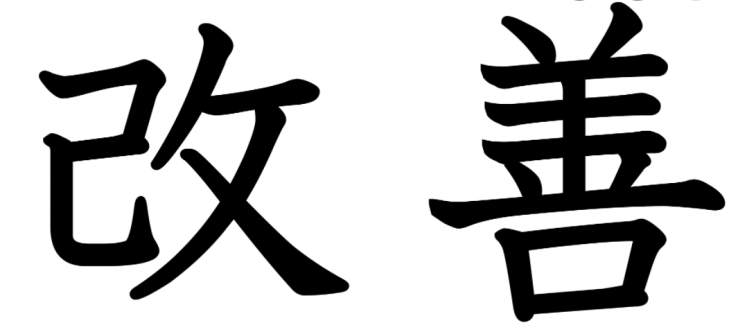
For those unfamiliar with Kaizen, let’s break it down. The word itself comes from two Japanese characters: 改 (kai), meaning “reformation, change, modify, or mend,” and 善 (zen), meaning “goodness or virtuous.” Together, they represent the philosophy known as “continuous improvement.” But it is much more personal than simply thinking this is about business and simple activities. 改 can be broken down into two parts: a) the self or I and b) to hit, whip, or put into submission. So holistically, kaizen isn’t just continuous improvement from a business lens but also focused self-improvement; a concept of breaking apart what you have to put it back together in a better form. Masaaki Imai once wrote:
“The Kaizen Philosophy assumes that our way of life – be it our working life, our social life, or our home life – deserves to be constantly improved.”
Kaizen isn’t about making one significant change but many small, incremental changes that add up over time. This approach improves efficiency and fosters a culture of innovation and engagement that starts at the individual’s core, not within the confines of a boardroom or shop floor.
To be continued…
—
Why Small Steps Matter
Throughout my career, many leaders have approached me, stressing the importance of making quick improvements to begin reaping the benefits of available opportunities. What many of them overlook is that our current situation is rarely the result of a single, significant change we made in the past. Instead, it typically stems from a series of small, incremental changes that led us away from our desired outcomes. To effectively influence change and ultimately achieve the results we want, making small, consistent steps toward those outcomes is a much more sustainable approach.
Consider this analogy: your business, organization, or life is like a massive ship navigating the sea. If you attempt to turn the ship around too quickly, you risk capsizing it and potentially sinking it to the ocean’s depths. While I may not be a sailor, I can confidently say that’s not an ideal situation for your vessel. However, making small adjustments and changes is much more manageable, allowing you to adapt to the new conditions resulting from the shift you’ve initiated.
The most important lesson I’ve learned from this concept is that kaizen encourages patience and persistence, making even the most daunting goals feel attainable. Here are a few ideas to help cultivate a mindset of kaizen in your life:
Tips for Integrating Kaizen
- Daily Improvement: Try implementing a simple habit (e.g., 5 minutes of tidying a workspace) that exemplifies the Kaizen approach
- Tracking Progress: Recording small wins each day to stay motivated and see your growth over time
- Mindset of Curiosity: View obstacles as learning opportunities rather than barriers to success
I would invite you to start using the concept of kaizen today by taking a single small step toward a goal. Share any small changes you plan to make in response to this issue, and remember the smaller the step the better. Don’t try to jump to the top of the summit of a mountain in one step, take one step at a time consistently, and eventually you will reach the top.
Looking Forward to the Next Issue:
Next time, we will dive into the “5S” methodology from my latest book, 5S Mastery, and how to use that methodology to not only create an organized workspace but also build morale and ultimately bring some efficiency into your processes. Spoiler alert: this methodology works on any sized business, even solo ones, so stay tuned for that.
Until next time…
“Success is the sum of small efforts, repeated day in and day out.” — Robert Collier
 Steve Beauchamp