Get Organized with 5S: A Simple System for Lasting Order
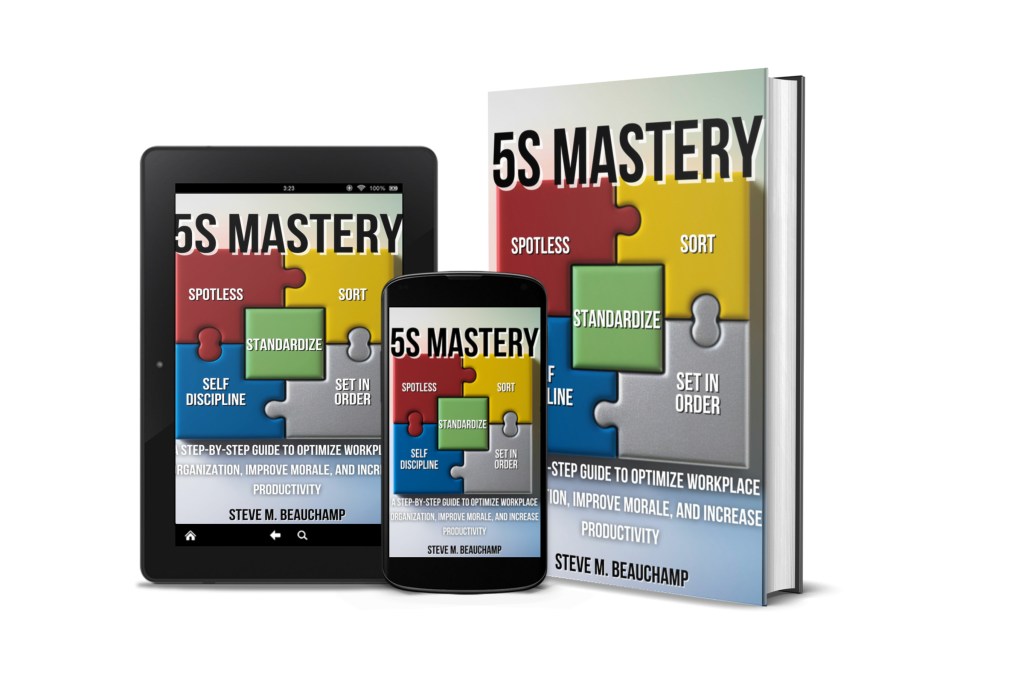
The most recent book I published is titled 5S Mastery, which was released at the beginning of September. This book focuses on the 5S methodology, which, when applied to either a physical or digital environment, has the potential to create a system that boosts productivity, reduces stress levels, and helps you locate items in seconds. Contrary to what you might have read or believe, this methodology is not restricted to large-scale manufacturing environments; it can be applied to businesses of any size, as well as in home settings if desired.
What is 5S?
5S is a methodology designed to bring order from chaos in various environments. Traditionally, this system is taught with five key components: Sort, Set in Order, Shine, Standardize, and Sustain. Originating in post-World War II Japan, 5S aimed to keep manufacturing spaces efficient, safe, and organized, with Toyota leading the way in its implementation. As the methodology spread across Japan and eventually the globe, Western organizations encountered cultural nuances that led to mixed results when trying to adopt it.
In my book, 5S Mastery, I present a reimagined approach to this framework, drawing from my research and understanding of the Japanese language and culture. One significant challenge in implementing the traditional model is the lack of established standards and documentation at the onset. In many Japanese companies, clear standards and standard work are created from Day 1, allowing for a smooth integration of the Standardize step as they simply update existing documentation. Conversely, many North American companies tend to overlook or undervalue the importance of documentation and standards. This gap can leave organizations without a solid foundation when trying to implement the 5S system.
My reimaged framework is as follows: Standardize (because you must start with having a Standard), Spotless (as Shine does not fully capture the essence of the Japanese concept of sanitizing), Sort & Set in Order, and finally, Self-Discipline (instead of Sustain, which I found is not the correct interpretation). Notice that the order is different: Standardize comes first. As Taiichi Ohno once said, “Without standards, there can be no kaizen.” In my opinion, this is the starting point. Without establishing a standard, it becomes unclear what to Sort, Set in Order, and Shine.
Practical Benefits of 5S:
5S is about more than just tidying up; it involves creating a system that enhances efficiency, saves time, and keeps spaces organized. How often have you struggled to find something, only to eventually discover it hidden beneath other items? I’ve lost count of how many times that’s happened to me. Each time, I end up feeling like I’ve wasted valuable time that I could have used for something more important.
Perhaps someone moved an item you planned to use and stored it in a location you weren’t aware of, leading to the same frustrating experience. None of us enjoy the sensation of wasting our time, and this methodology is one of the best ways I’ve found to reduce that feeling.
I’ve also discovered that this system can be applied in any environment, both professional and personal. Regardless of where you implement it, if it involves other people, it’s crucial to ensure that everyone understands the reasoning behind the change.
Now, let’s explore an example of how to get started with this system in a relatable context.
Getting Started with 5S: Key Tips from 5S Mastery:
Let’s take the example of our kitchens at home, or if you work in a kitchen, these principles will apply easily as well. The key is to start small to develop the right habits and muscle memory. If you attempt to tackle something too big right away, you may become overwhelmed and give up, concluding that this methodology doesn’t work.
Standardize: Ensure that the process or area you want to focus on has clear standards in place. This can involve implementing standard work procedures, checklists, or simple daily routines. No matter how you establish the standards, make sure everyone knows their roles and responsibilities regarding what they need to do and that you’ve written it down somewhere.
Spotless: Maintaining cleanliness is crucial for ensuring that the space remains functional and efficient. If you don’t already have a cleaning checklist for the area, this is a good practice to implement. Highlight the key tasks that need to be done, such as wiping down counters, mopping the floor, or putting away dishes.
Sort & Set in Order: When an area is kept clean, it becomes easier to notice when things are missing or out of place. For example, think of the knife block in your kitchen: if a knife is missing in a messy kitchen, it can be difficult to find. However, in a clean space, identifying the location of the missing knife becomes much easier. The same principle applies to your utensil drawer—without an organizer, silverware can get scattered everywhere, making it hard to find what you need. You may also discover items in your kitchen that you no longer need; this is a great opportunity to donate them or dispose of them, freeing up space for the items that are essential.
Self-Discipline: Remember the cleaning checklist you created earlier? To keep everything in good order, establish a follow-up audit schedule to check on the area regularly. Add this to your calendar so you don’t forget. The more frequently you succeed in completing these follow-ups and audits, the more it will become second nature for you and those working in the area.
Once you build consistency in your kitchen, you can look to tackle more complex challenges, such as organizing the garage or your home office. The key is to carve out manageable chunks of time and avoid taking on too much at once. You can also apply these same principles to your business or organization. Keep in mind, however, that you will need to consider the change management aspect of the implementation, which is something I cover in my book. If you’re interested, you can find a copy here: 5S Mastery
Looking Forward to the Next Issue:
Next time, we will explore a deeper approach to building self-discipline, inspired by the samurai techniques I discussed in “Always Improving: Lessons from the Samurai.” Stay tuned for that issue in the coming weeks.
We’ve reached the end of another one-sided conversation. If you have any thoughts or comments about your experience with using 5S, or if you have tips and tricks for bringing more order and organization to your space, I would love to hear from you. Please reply to this email, and I will get back to you. For now, I’ll leave you with a quote from Benjamin Franklin:
“For every minute spent organizing, an hour is earned.” — Benjamin Franklin
 Steve Beauchamp